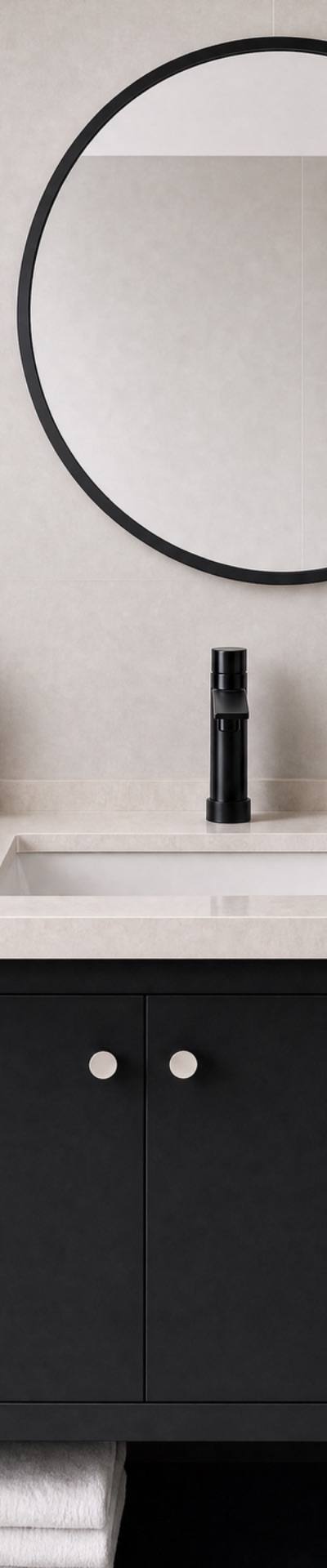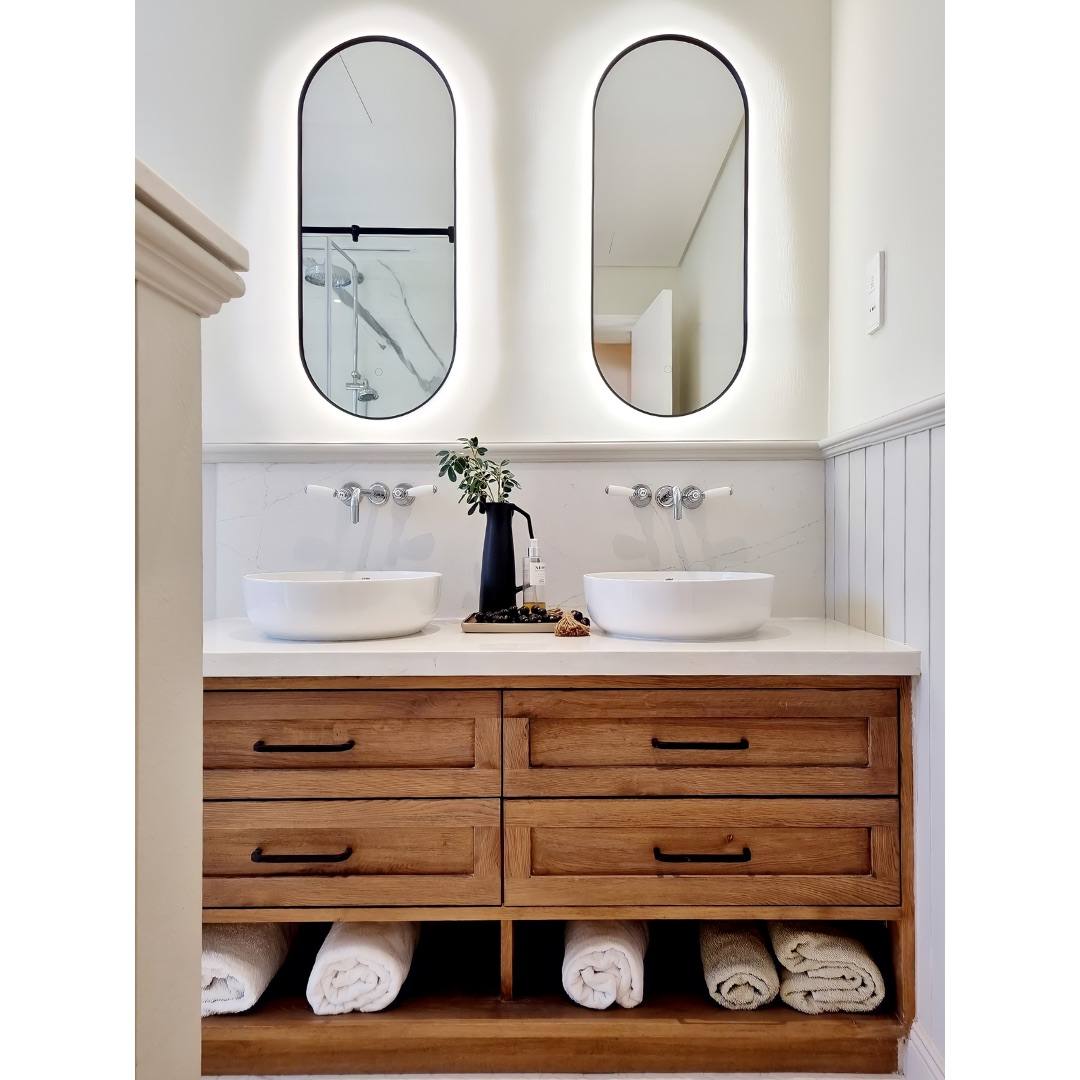
Natural stone vs quartz vanity top Dubai
Two hard surfaces with different failure modes. Natural stone is one slice of a slab, so it looks like nothing else and it needs sealing. Engineered quartz is pressed and non-porous, so it forgives a busy bathroom, though it can yellow in strong sun and dull under acid cleaners. In most UAE bathrooms quartz is the lower-risk top. Natural stone is what you pick when the slab itself is the point.
What each material actually is
A natural stone top begins as a block and ends as one slab cut to your drawing. The veins sit where geology put them, so you approve the slab or accept what arrives. No repeat, no second identical unit, and that is the whole appeal.
Engineered quartz is roughly nine parts ground quartz to one part resin, pressed into slabs under heat. The pattern repeats, the slabs are consistent, and the surface has no open pore. The quartz we cut most is Super White, Black, Calacatta Miranda and Statuario Exclusive.
Both leave our workshop in Jebel Ali cut to size, edges profiled, tap holes drilled. Every unit is built 1:1 to the drawing you approve first.
How each behaves in a UAE bathroom
Desalinated water is the thing to plan around. It leaves limescale rings wherever it dries, and in a bathroom that is every morning. Quartz ignores it: wipe and it is gone. Natural stone needs sealing, and once the sealer wears the same water soaks in and dulls the face.
Acid is the second issue. Toothpaste, lemon and most bathroom descalers etch the softer stones and leave a pale mark that will not buff out. On quartz the acid attacks the resin instead, so a harsh cleaner strips shine from a patch. pH-neutral on both. More on that in what survives UAE humidity.
Sun matters more than people expect. A top under a window that takes direct afternoon light will yellow the resin in quartz, slowly and evenly, and you notice only when you compare it with a shelf that stayed dark. Natural stone has no resin to yellow.
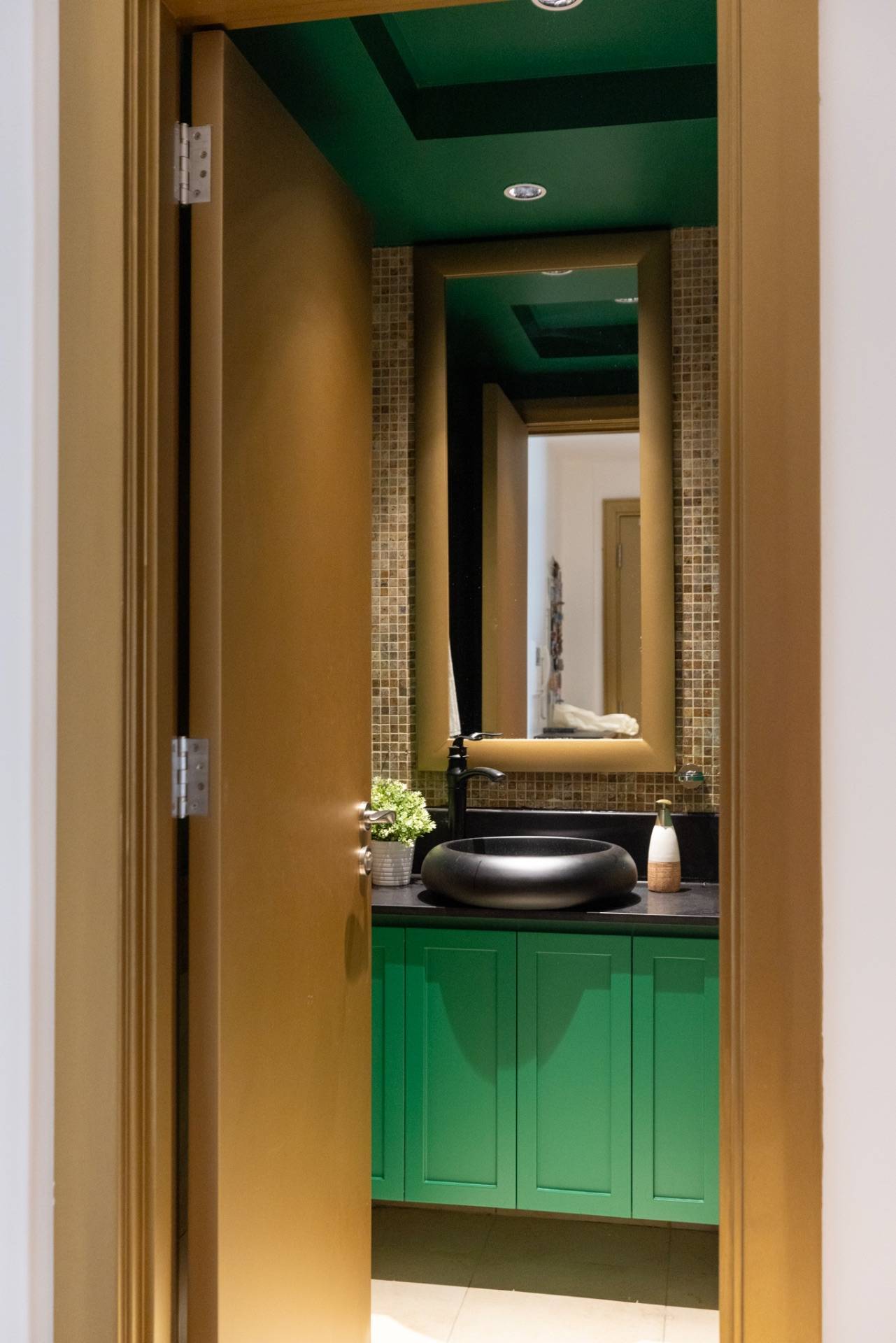 A powder room vanity. Low traffic, look first, which is where a one-off stone top earns its place.
Weight, fixing, seams and tap holes
A 20mm stone top on a 1,500mm run is heavy, and where that weight lands decides the design. A wall-hung carcass needs blocking in the wall and brackets rated for stone, basins and water. A floor-standing unit with a plinth carries it without any of that. Decide before the wall is tiled. wall-hung vanities and stone-top weight goes further.
Seams are drawn, not discovered. On a long double-basin run the join goes away from the basin centres and away from where you stand. One cut-out or two, tap holes drilled in the workshop to the drawing, edge profile matched to the doors. Fit is what customers judge:
"Our new bathroom vanity looks beautiful. The custom top fits perfectly. We hired Just Right for the job. The workers were careful and clean." Syed Amaan, 5/5
Google rating: 5 from 4 reviews.
What changes the price inside AED 6,000 to 8,000 all-in
Made-to-measure vanities from our workshop land in AED 6,000 to 8,000 all-in. Inside that range four things move the number: the slab, the number of cut-outs, the edge profile and the thickness. A two-basin run with a mitred edge and a thicker top sits at the top of it, a single basin on 20mm sits lower. what a stone vanity top costs and how it's built breaks the cost side down.
A fair quote itemises the carcass material and how it handles moisture, the top and its thickness, the edge, each cut-out and tap hole, delivery and installation. One line and a number is not a quote.
Maintenance you will actually do
Quartz wants warm water, a drop of pH-neutral soap and a cloth after the last shower. No bleach, no vinegar, no general descaler. If a film appears, use a cleaner sold for quartz.
Natural stone wants the top dried after use and resealed when water stops beading. Keep acidic bottles off it and wipe spills rather than letting them sit.
Both dislike hot styling tools and anyone standing on them.
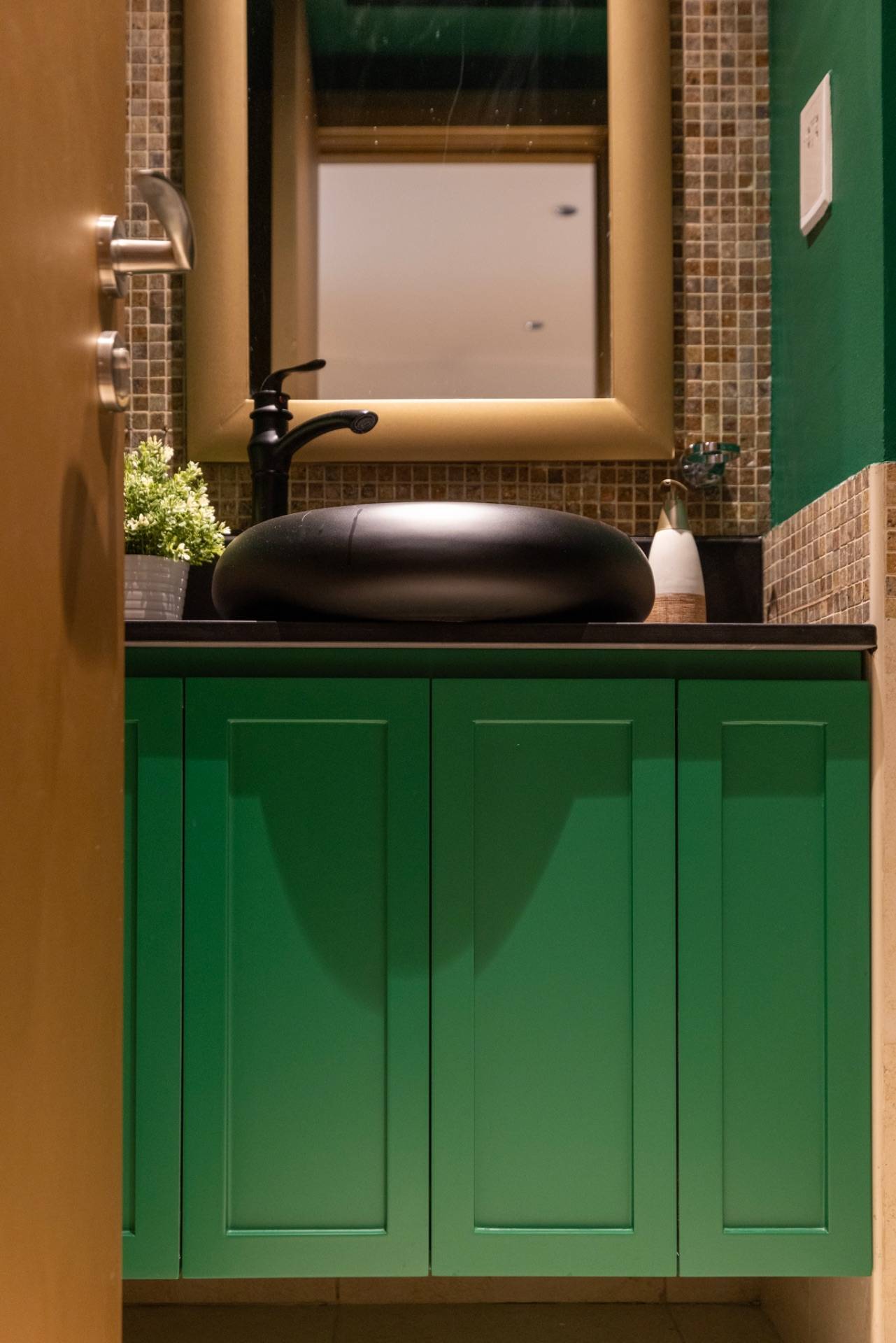 bathroom vanity with a black vessel sink and matte black tap under a gold framed mirror" loading="lazy" decoding="async" /> Carcass, top and cut-outs get drawn together, then built 1:1 in our Jebel Ali workshop.
Which one for which bathroom
| Bathroom | Top | Why |
|---|---|---|
| Family bathroom, hard water, daily use | Quartz | Nothing to seal, nothing to stain |
| Double basin run over 1,500mm | Quartz | The pattern repeats across the seam |
| Top under direct afternoon sun | Natural stone | No resin to yellow |
| Guest powder room, low traffic | Natural stone | One slab, no repeat anywhere |
| Wall-hung carcass | Quartz at 20mm | Consistent slab, no fissures at the cut-out |
Quartz for anything used daily by more than two people, and for every wall-hung unit. Natural stone for a powder room, or a bathroom where the slab is what you are buying.
Drawing first, install about 14 days later
Send a photo of the space with something in it for scale, the width and depth you have, where the basin and tap sit, where the waste falls, and whether the carcass is wall-hung or floor-standing. Add the emirate you are in and a note on the quartz or stone you like. WhatsApp is the fastest way to a firm number. If you already have a drawing, send us your drawing for a fixed quote. We build 1:1 to the approved version in about 14 days and install across all of the UAE from our workshop in Jebel Ali.
Frequently asked questions
Does natural stone stain in a UAE bathroom?
Yes, if it is left unsealed. The top is porous, and desalinated water, soap and toothpaste work into it once the sealer thins. Sealed stone that is wiped dry stays even for years.
Is quartz fine with hard water?
Yes. Quartz has no open pore, so limescale sits on the surface rather than inside it. Wipe with a pH-neutral cleaner and the rings come off. Skip acidic descalers, which dull the resin.
Can I keep my existing top and change only the carcass?
Sometimes. The new carcass has to be drawn around the top you have, including its cut-outs and thickness. Send photos and exact measurements and we will tell you whether the top is worth keeping.
How thick should a vanity top be?
20mm is the practical default and what most of our units use. Thicker reads heavier, costs more, and loads a wall-hung carcass harder.
Do you template on site?
The unit is built 1:1 to the drawing you approve, so the drawing stage carries every dimension. Walls out of square, an off-centre waste, a tap that lands on a seam, all of it has to be on that drawing before anything is cut.