Vanity carcass: choosing one that lasts in UAE humidity
A vanity carcass is the box behind the doors and drawer fronts: the panels that carry the top, the basin and the plumbing. In the UAE it decides whether a bathroom vanity still sits square after years of air conditioning and shower steam. Settle the board, the thickness and the cut-outs before anyone cuts timber.
What the carcass is and why it decides vanity lifespan in UAE humidity
A bathroom in the UAE runs two climates. The air is cooled and dried for most of the day, then a shower pushes warm moisture into the room. The vanity sits between them. The top takes the splashes. The carcass takes the damp air, the condensation under the top and the slow drip from a tap tail.
A carcass cannot be judged by the door finish. The panels, the joints and the cut edges do the work. A painted face can look perfect while the bottom panel around the trap has started to swell. By the time a door drops or a drawer rubs, the damage is inside the box.
Every unit we make is built 1:1 to the drawing the customer approves before production. For the carcass, that drawing fixes the clearances for the trap, the drawer boxes and the top overhang. If those are left to guesswork on site, the carcass is the part that pays.
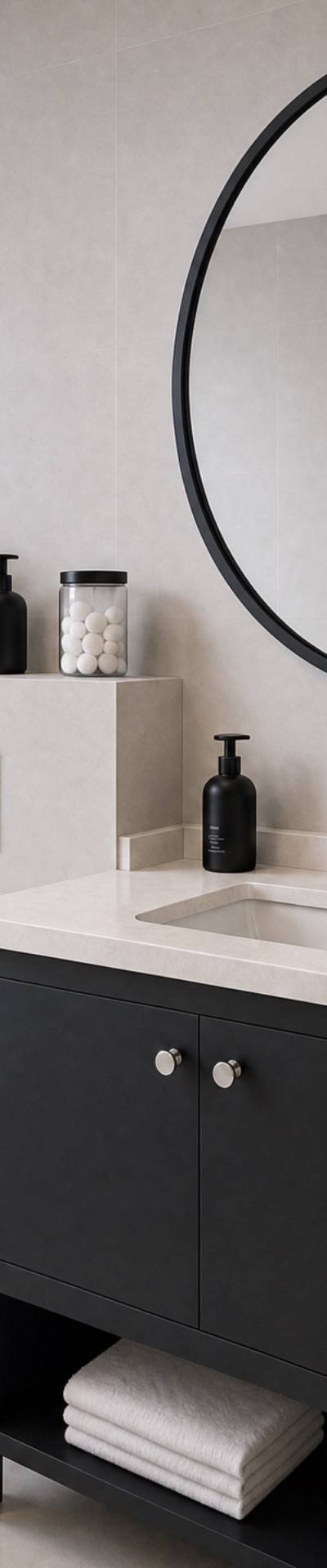
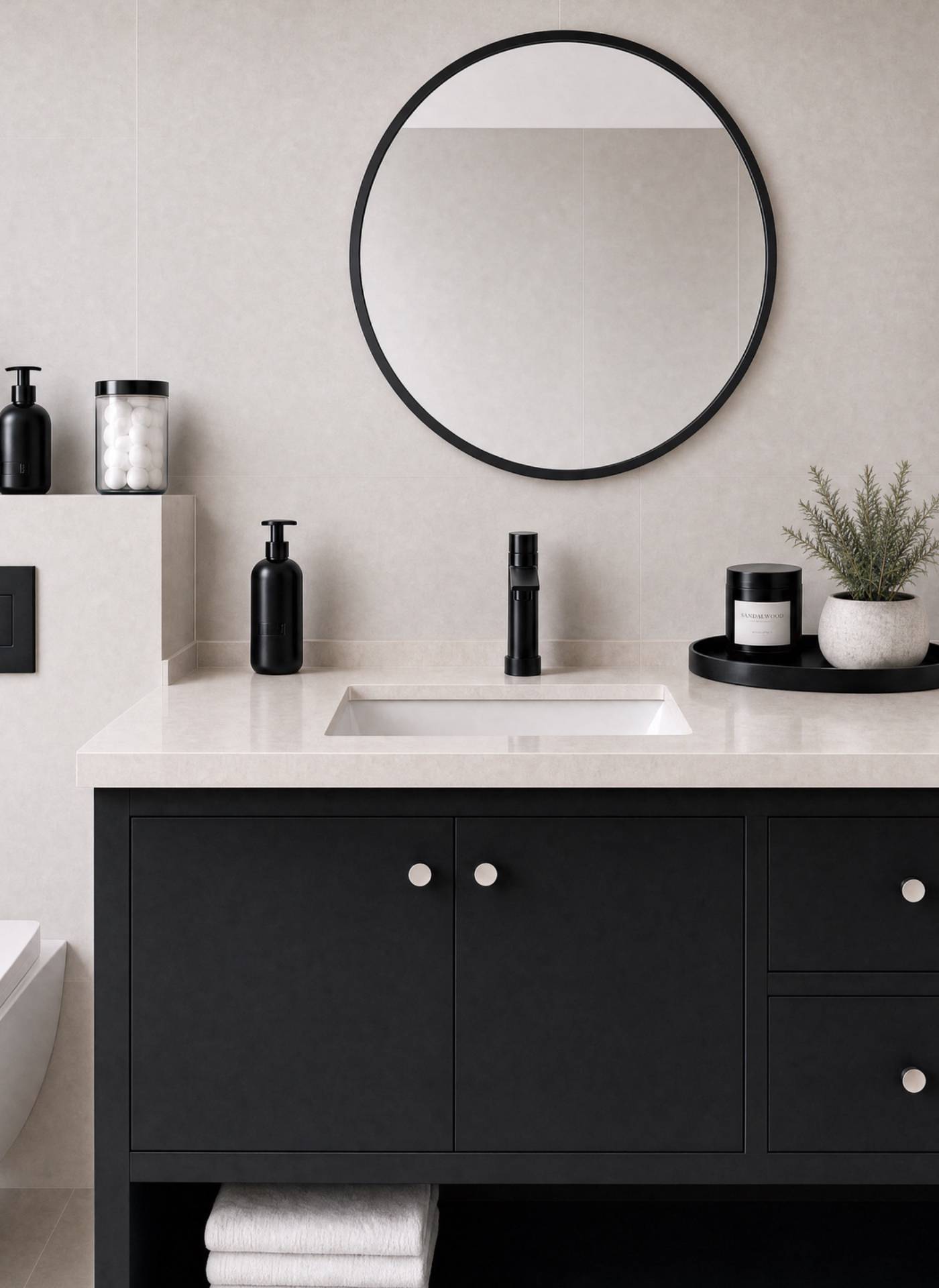 A black made-to-measure vanity with an integrated basin. The carcass sets the line of the top and the position of the waste.
18mm marine ply, MDF, chipboard and moisture-resistant board near a shower
A waterproof bathroom vanity in Dubai or anywhere on the coast still depends on the board and the joints, not a coat of sealant. Four boards turn up in quotes. They do not behave the same.
| Board | Where it can work | Where it fails near a shower |
|---|---|---|
| 18mm marine ply | Carcass panels and shelves in a family bathroom or wet room | A raw cut edge left unsealed, or a screw hole that lets water into the core |
| Moisture-resistant MDF | A low-use guest bathroom with a good top and sealed edges | The bottom rail and sink cut-out, where water sits |
| Standard MDF | A dry vanity outside the splash zone | Anywhere steam condenses or a trap drips |
| Chipboard | Rarely worth specifying for a bathroom vanity | Swells fast at cut edges and around fixings |
An 18mm carcass bathroom vanity is the sensible baseline. The vanity carcass material matters more than the finish because the board holds the hinges, the runners and the top. Marine ply uses water-resistant glue, but the end grain still needs sealing. A marine ply vanity Dubai buyers can inspect should show a sealed cut-out, not just a branded board.
Thickness is the next decision. A 15mm or 16mm board saves a few millimetres and a little board cost. It gives screws less to hold at hinges and drawer runners, and it sags more across a wide opening. On a long run with a heavy top, that difference shows. The saving is small; the cost is a top that rocks or a drawer line that rubs.
Our more bathroom vanity guides cover tops and storage. This piece stays on the carcass because that is the part you cannot change later without replacing the unit.
Edge banding, sealing and the sink cut-out: where vanities leak
Most failures start at an opening, not in the middle of a panel. The sink cut-out is the largest opening. Water runs down the tap tail, past the silicone bead and into the core if the cut edge was not sealed before the basin went in. A concealed or undermount sink makes this worse because the cut is hidden.
Edge banding is not sealing. Banding protects the front edge from a mop and a splash. It does not protect the raw board around a pipe hole or the back edge against a wall. Ask what sealant goes on the cut-out, who applies it and whether the trap opening is sealed after the waste is fitted.
Install matters as much as the factory. A unit pushed against an uneven wall can twist, opening a silicone line at the top. Feet out of level put stress on the carcass joints. Check level, clearance and the waste connection before the top is set.
Our new bathroom vanity looks beautiful. The custom top fits perfectly. We hired Just Right for the job. The workers were careful and clean. Syed, 5/5
Our Google rating is 5 from 4 reviews.
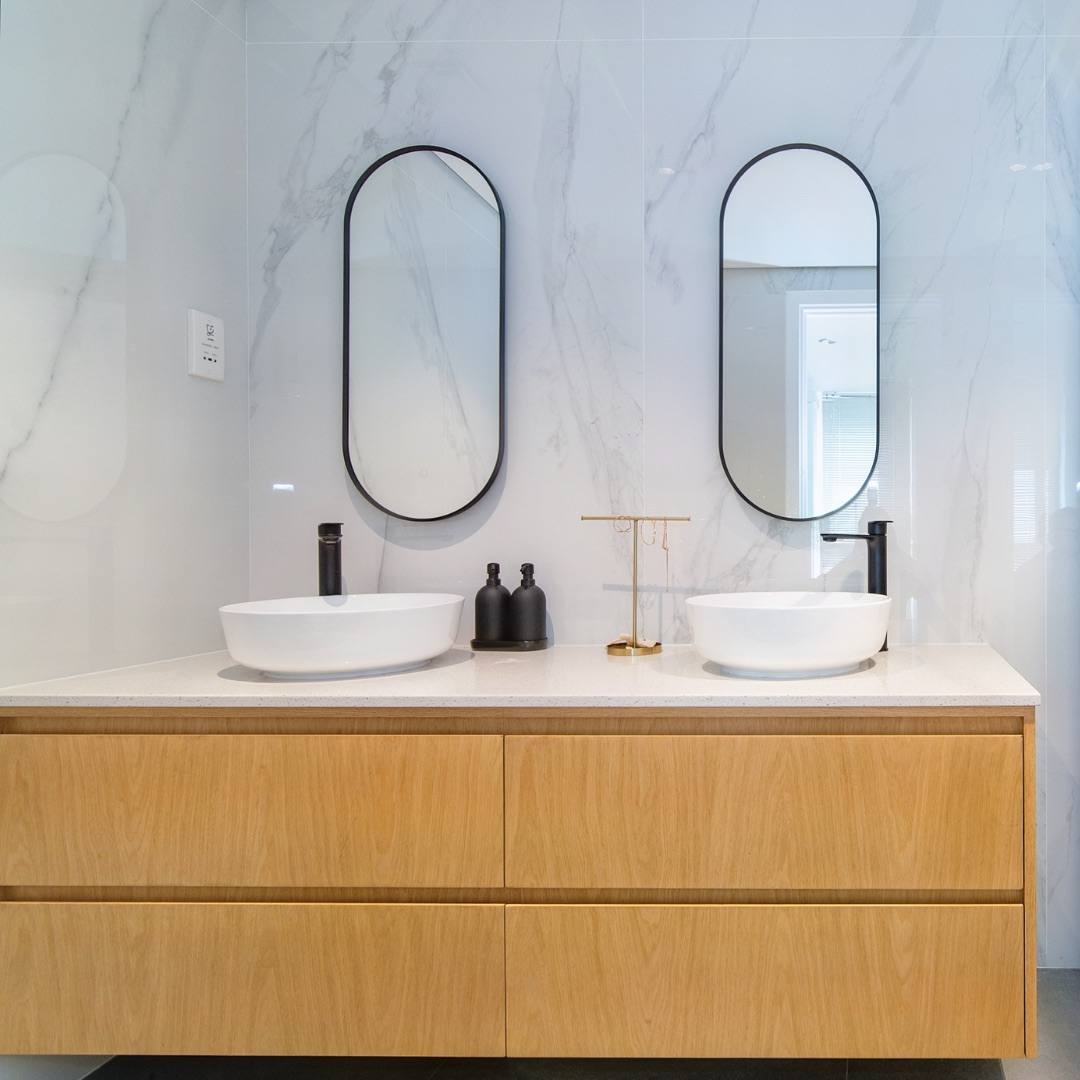
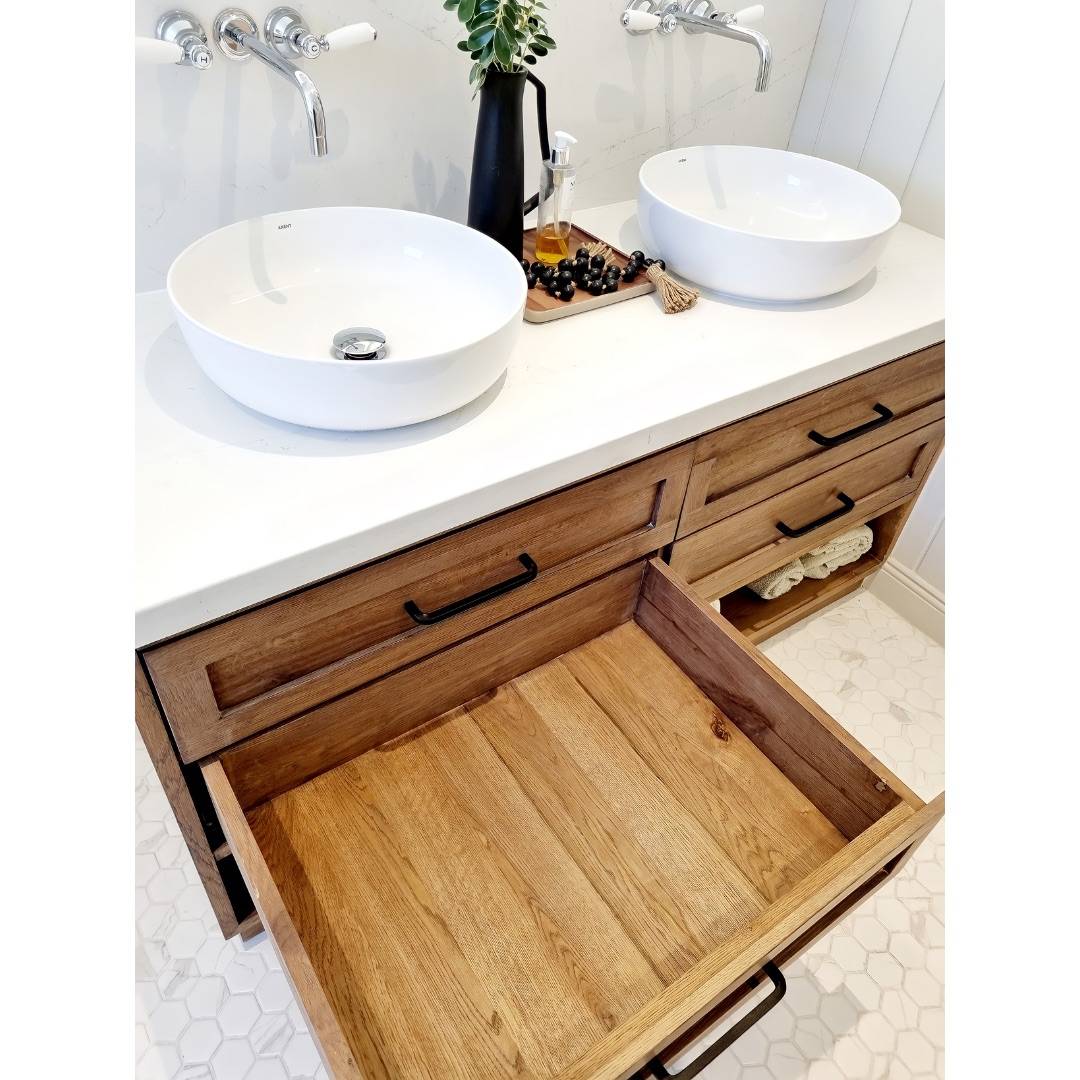 An open drawer shows the board and edge detail on a double vanity, with the white top and basins forward in the frame.
How a made-to-measure carcass is built 1:1 to your drawing in about 14 days
We design and build bespoke bathroom vanity units across the UAE in our factory in Jebel Ali, Dubai. The drawing is the control point. You approve a full-scale layout with the size, basin position, tap holes and internal layout. We build the unit 1:1 to that drawing, then install across the UAE. About 14 days is the usual build once the drawing is approved.
That sequence removes site guesswork. The carcass is cut and edged in the factory, not in a bathroom with a hand saw. The top is set to the same drawing. The installer fits a unit that already matches the plan, rather than adapting a standard box to a wall that is out of square.
You can see the output in vanity units we have built. Look at the drawer lines and the way the top sits over the carcass. Those details are why a 1:1 drawing matters.
What a fair quote states, and the questions to ask before you sign
A fair quote for a bespoke vanity should name the carcass board, the thickness, the edge treatment, the sink cut-out sealing, the top and the installation. It should say what is excluded: tap, basin, waste, tiling, making good. If the quote only says marine ply and a top, it has not told you enough. The same words can hide two very different units.
Our all-in range for a bespoke vanity unit is AED 6,000 to 8,000. That is the number to compare against other written quotes, not a per-metre rate from a showroom display. The top, the carcass material and access all sit inside that range. A quote that is much lower usually has a thinner board, an unsealed cut-out or a top that is not in the same specification.
Before you sign, ask what board is the carcass and whether it is 18mm. Ask how the sink cut-out and pipe holes are sealed. Ask if the drawing is full scale and if you approve it before cutting. Ask who installs and who owns the silicone line. Ask what is excluded. A supplier who cannot answer in writing is asking you to trust a finish you cannot see.
Send bathroom photos, the wall-to-wall width, depth, height and basin position, plus the location. Include a picture of the waste and tap supply so the drawing can be checked in one pass. WhatsApp +971 54 483 3966 is the fastest way to get a quote on a made-to-measure vanity.
Frequently asked questions
Is 18mm marine ply overkill for a small guest bathroom?
No. A small room still has a shower, a trap and condensation. The 18mm board gives the top and the fixings more support, and it resists a knock at the sink cut-out better than a thinner panel. The extra cost is small next to replacing a swollen unit.
Can a swollen carcass be repaired, or must it be replaced?
A swollen chipboard or MDF panel rarely dries back to its original shape. A local repair may close the door line for a while, but the core stays weak around the fixings. If the sink cut-out or bottom panel has gone soft, plan on a new carcass.
Do I need a special coating inside the cabinet?
A sealed cut edge and a well-fitted top do more than a coat of paint inside. Ask for the sink cut-out and pipe holes to be sealed before installation. Any coating must suit the board and not trap water against a joint.
How do I check the drawing before the factory starts?
Check the overall width, depth and height against the wall, not against the old unit. Mark the basin centre, the tap positions and the waste. Confirm the drawing is full scale and that you approve it before cutting. Changes after production are costly.
What should I send on WhatsApp for a quote?
Send clear photos of the bathroom, the wall-to-wall width, the depth, the height and the basin position. Add the location and a picture of the waste and tap supply. The team can then check the drawing and confirm the next step.